
KALAMULLAH ONLINE
Helping Families Connect with the Quran Since Day One
Introduction
Every Muslim parent has that moment. You sit your child down, open a laptop, and think “This time, we’re going to be consistent.”
And then life happens.
Three weeks later, the sessions have dropped. Your child is losing interest. And you’re not even sure if they’re learning the right way anymore.
You’re not alone. Thousands of families go through this when they try to learn Quran online. The good news? Most of these struggles come from a few common mistakes and once you know them, they’re easy to fix.
Let’s talk about them honestly.
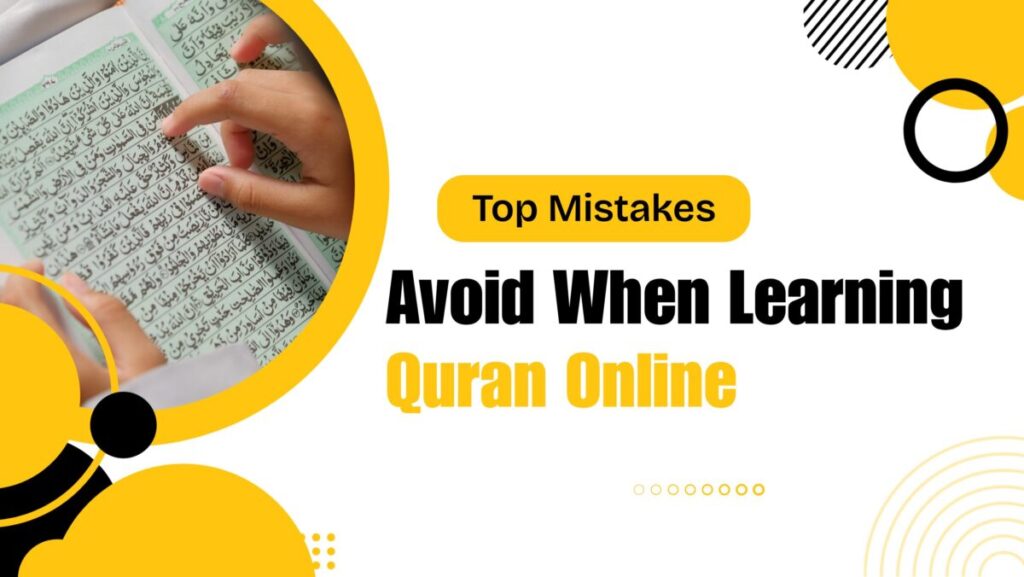
Mistake #1: Choosing the Wrong Platform Without Asking the Right Questions
Not every Quran academy online is the same.
Some offer pre-recorded videos with no real interaction. Others pair your child with a qualified teacher who gives live, personalized feedback. There’s a big difference.
A parent from Birmingham shared this recently: “We signed up for the first platform that came up on Google. After two months, my daughter could recite but with so many pronunciation errors, we had to start over.”
Before you enroll, ask:
- Is this live one-on-one, or recorded?
- Is the teacher qualified in Tajweed?
- Can I sit in on a trial class?
A good Quran tutor for kids will welcome these questions. If they don’t that’s a red flag.
Mistake #2: Skipping Tajweed from the Start
This one hurts the most in the long run.
Many families just want their child to read Quran. Fast. And that’s understandable. But learning to recite without proper rules is like building a house without a foundation.
Tajweed learning online might sound technical. But with the right teacher, it becomes natural almost like music. It shapes how every letter sounds, how the breath flows, how the words carry meaning.
The Prophet ﷺ said: “The one who is proficient in the recitation of the Quran will be with the honourable and obedient scribes.” Sahih Muslim
Your child deserves that. Don’t rush past the rules to get to the speed.
Mistake #3: No Fixed Schedule and No Accountability
“We’ll do it whenever we have time.”
This is the sentence that ends more online Quran classes than anything else.
Children need rhythm. They thrive on routine. If Quran time changes every day sometimes morning, sometimes night, sometimes skipped it stops feeling important to them.
Think about it from your child’s view. If football practice is every Tuesday at 5pm, they remember. They prepare. They show up. Quran should feel the same way.
Pick two or three time slots per week. Stick to them like any other commitment. Within a month, your child will remind you when it’s time.
Mistake #4: Treating Online Classes Like “Less Serious” Than In-Person
There’s still a mindset in some households that online means informal. It doesn’t.
Your child should have a clean, quiet space. No TV in the background. No siblings running through the room. The phone should be charged. The connection should be tested before the class starts.
When a child walks into a physical masjid class, the environment tells them: this matters. You can create that same feeling at home. It just takes intention.
Put up a small Quran corner. Maybe a prayer mat, a mushaf, a little shelf. Let that space carry meaning.
Mistake #5: Not Tracking Progress or Communicating with the Teacher
Would you send your child to school for months without ever asking their teacher how they’re doing?
Of course not. But this happens constantly in online Quran classes.
Parents enroll, pay the fees, and assume everything is fine unless the child complains. Meanwhile, small issues a recurring mistake in a letter, a lack of confidence during recitation quietly grow into bigger problems.
A good Quran tutor for kids will give you regular updates. Ask for them. Even a quick five-minute chat after class every couple of weeks can transform your child’s progress.
Mistake #6: Giving Up After the First Hard Phase
Here’s something nobody tells you at the start: the first six to eight weeks are the hardest.
Your child might resist. They might say it’s boring. They might cry once or twice. This is completely normal.
Learning anything new especially something as sacred and precise as the Quran takes time to settle in. The breakthrough usually comes right after the resistance.
“I almost pulled my son out after the first month. He hated it. Then one evening he just… read a whole page on his own. He came running to show me. I cried for ten minutes.”
Don’t quit during the hard part. That’s where the growth is.
Mistake #7: Ignoring the Emotional Connection
The Quran isn’t just a book to recite. It’s a relationship.
If your child only ever experiences it as homework as something to get through they may finish the Quran without ever falling in love with it.
Talk to them about what they’re reciting. Share the meaning of a verse in simple words. Let them see you recite. Let them hear the emotion in your voice when you make dua.
When a child sees their parent moved by Quran that leaves a mark that lasts a lifetime.
What a Good Online Quran Journey Actually Looks Like
When everything is in place the right Quran academy online, a qualified teacher, a fixed routine, and a family that values the process the transformation is real.
Children who start shy and stumbling become confident reciters. Parents who felt disconnected from their roots feel something come alive again. The home changes.
That’s not an exaggeration. That’s what the Quran does.
Ready to Start the Right Way?
If you’ve been making some of these mistakes don’t feel guilty. Feel informed. Now you know better. And now you can do better.
Kalamullah Online offers live, one-on-one online Quran classes for children and adults at every level. Our certified teachers specialize in Tajweed learning online, Quran memorization, and building a real, lasting connection with the Book of Allah.
➤ Book Your FREE Trial Class Today ➤
No commitment. No pressure. Just 30 minutes that could change everything.
May Allah make it easy for every family seeking to learn His words. Ameen.