Introduction
There’s something quietly beautiful about hearing a child recite Quran for the first time.
It might not be perfect. The pronunciation might be slightly off, they might pause in the wrong place, or lose their thread halfway through and look up at you for help. But the fact that it’s happening that a small voice is carrying the words of Allah is something most parents don’t forget.
If you’re wondering where to start, which surahs are realistic for a young child, and how to make the whole experience feel less like homework and more like something they actually want to do this is for you.
Why Short Surahs First
It might seem obvious, but it’s worth saying clearly: short surahs aren’t just easier. They’re also more powerful as starting points than most parents realize.
When a child memorizes a complete surah even a very short one they feel it. There’s a real sense of “I did that.” And that feeling, that small moment of accomplishment, is what builds the desire to learn more. You’re not just teaching them words. You’re teaching them that the Quran is something they can hold.
Short surahs also appear constantly in daily prayer. So almost immediately after memorizing, a child gets to use what they’ve learned. That connection between learning and living is huge for young minds.
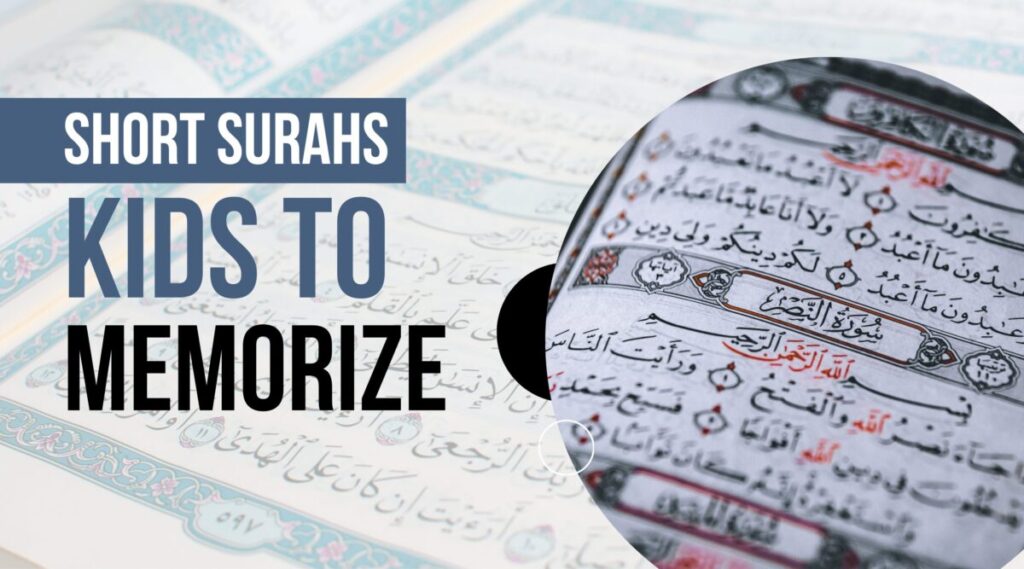
The Surahs And Why Each One Works for Kids
Surah Al-Fatiha
Start here. Always.
Yes, it’s seven ayaat slightly longer than some of the others on this list. But Al-Fatiha is woven into every prayer, five times a day, every single day. A child who knows it properly has something they’ll recite tens of thousands of times over their lifetime.
The rhythm is gentle and consistent, which makes it easier to memorize than it first appears. And when you explain to a child, simply, that Al-Fatiha is a conversation with Allah that when we say it in prayer, He responds to each line something shifts in how they approach it. It stops being a memorization task and starts feeling like something more.
Surah Al-Ikhlas
Four short ayaat. Clean, clear, and deeply meaningful.
Surah Ikhlas is probably the first surah most children fully memorize after Al-Fatiha, and there’s a good reason for that. It’s brief, the sounds repeat in a way that makes it easy to hold in memory, and the meaning is one of the most fundamental in all of Islam. This is who Allah is.
Many parents notice their young children actually love this surah. There’s something about “Allahu Ahad” the simplicity and completeness of it that resonates even with very small kids who can’t yet explain why.
Surah Al-Falaq and Surah An-Naas
These two really belong together.
They’re often taught as a pair, and rightly so. Similar in rhythm, similar in structure, both seeking Allah’s protection. Children pick them up quickly because once they know one, the pattern of the other feels familiar.
The beautiful thing about Surah Al-Falaq and Surah An-Naas is that kids can understand them easily. You’re asking Allah for protection from darkness, from harm, from the whispers that try to pull you away from what’s good. Even a six-year-old gets that. And knowing that these are surahs the Prophet ﷺ recited every morning and night makes them feel important in a way children respond to.
Surah Al-Kawthar
Three ayaat. Possibly the shortest surah in the Quran.
For a child who’s just getting started, Surah Al-Kawthar is a gift. It’s so brief that a child can memorize it in a single sitting if they’re in the right mood. The sounds are smooth, the rhythm almost musical, and finishing it in one go gives them an early win that builds confidence.
Don’t underestimate what that early win does. A child who memorizes their first complete surah especially one as short as this walks a little differently after. They know they can do it.
Surah Al-Asr
Three ayaat, but weightier than the length suggests.
Scholars have written entire books on Surah Al-Asr. Its brevity is almost deceptive. For a child, it’s easy to memorize and easy to hold but as they grow, the meaning will deepen with them. That’s the kind of surah worth planting early.
It also has a beautiful, almost urgent sound. Some children are drawn to it immediately.
Surah Ad-Duha
Eleven ayaat slightly longer, but worth including here.
Surah Duha was revealed to the Prophet ﷺ during a period of pain and silence, as a reminder that he hadn’t been abandoned. As a parent, there’s something profound about placing these words in your child’s heart early. Life will have its difficult stretches. These words will be there.
For memorization purposes, the surah has a gentle flowing rhythm that children often find easier than its length suggests. The sounds are warm and the ayaat aren’t overly long. With a little consistency, most children manage it within a few weeks.
A Few Thoughts on Actually Making This Work
Having a list of surahs is one thing. Getting a distracted eight-year-old to sit with you and learn them is another.
A few things that genuinely help:
Keep the sessions short. Ten to fifteen minutes is plenty for most children under ten. Better to end while they’re still engaged than to push through until they’re miserable. You want them coming back tomorrow.
Repeat, but make it interesting. Say the ayah, have them say it back. Then say it slightly wrong and let them catch the mistake. Kids love this more than you’d expect there’s something delightful about being the one who corrects the adult.
Connect it to prayer as early as possible. The moment a child recites a surah they’ve memorized in actual salah not as a lesson, but in a real prayer something changes. It’s not a school task anymore. It’s theirs.
Don’t make a big deal of forgetting. Children forget. They memorize a surah perfectly on Thursday and look completely blank on Saturday. That’s just how memory works at that age. Respond with patience, not frustration. The surah will come back. What matters is that they feel safe enough to keep trying.
Celebrate quietly. You don’t need a party every time. Sometimes a hug, or “I’m really proud of you,” or letting them pick a treat these small acknowledgments matter far more to children than elaborate rewards.
When You Feel Like You Need Extra Help
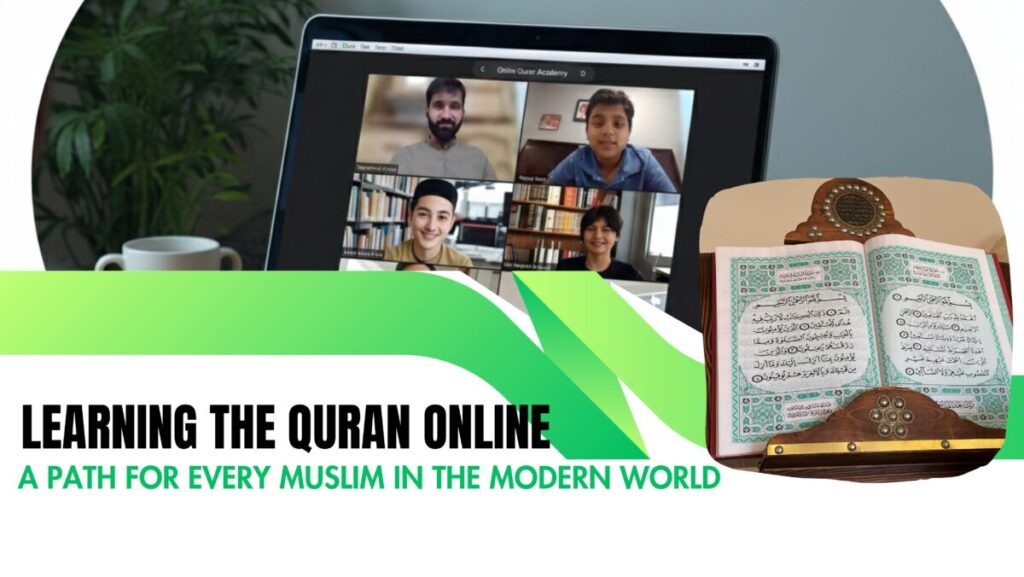
Some parents are completely confident teaching Quran at home. Others aren’t whether because of their own tajweed, or because their child just responds better to someone outside the family. Both situations are completely normal.
If you’re in the second group, finding a good Quran teacher online or local can take a lot of pressure off. There are experienced teachers who work with young children specifically and know how to keep them engaged in ways that aren’t always intuitive to parents. It doesn’t mean stepping back entirely. It just means sharing the responsibility, which is often the most practical thing you can do.
The Part That Actually Matters
Long after your child has grown, long after the lessons and the gentle corrections and the small wins what will stay is the relationship they built with the Quran in those early years.
It won’t be about how many surahs they knew by age seven. It’ll be whether they felt the Quran was something warm and familiar, something that belonged to them. Whether they associate it with patience and encouragement, or with pressure and dread.
You’re building that association right now, in the quiet sessions at home, in the way you respond when they forget, in the softness you bring to something sacred.
That’s not a small thing. It’s actually everything.
Start with one surah. Go slowly. Let them surprise you.