
Reading the Quran is not just about words. It is about reading it the way it was revealed. And that is where Tajweed matters.
Many people can read the Quran. But not everyone reads it correctly. Small mistakes in pronunciation can change meanings. And that is a serious issue.
This is why learning Tajweed is important for every Muslim.
What is Tajweed?
Tajweed means to read the Quran correctly. It focuses on:
- Correct pronunciation of letters
- Giving each letter its right
- Following proper recitation rules
In simple words, Tajweed helps you read the Quran the way the Prophet ﷺ recited it.

Quranic Command to Recite Properly
Allah clearly tells us in the Quran:
“And recite the Quran with measured recitation.”
(Surah Al-Muzzammil 73:4)
This word “measured recitation” means Tarteel. And Tarteel includes Tajweed.
So this is not optional. It is a command.
Why Tajweed is Important
1. It Protects the Meaning of the Quran
Arabic is very precise. A small mistake can change the meaning.
For example:
- Changing a letter sound can turn one word into another
- Missing a rule can distort the message
And that is not something we should ignore.
2. It Follows the Sunnah
The Prophet ﷺ recited the Quran clearly and correctly.
He did not rush. He pronounced every letter properly.
So when you learn Tajweed, you follow his way.
3. It Improves Your Recitation
Without Tajweed, recitation sounds broken.
With Tajweed:
- Words become clear
- Flow becomes smooth
- Recitation sounds better
And yes, it also builds confidence.
4. It Brings Focus in Salah
When you read correctly, you understand better.
And when you understand, you focus more.
This helps in Salah. Your connection improves.
5. It is a Form of Respect
The Quran is the word of Allah.
Reading it carelessly is not right.
Tajweed shows that you respect the Quran. You take it seriously.
Common Mistakes Without Tajweed
Many people make these mistakes:
- Mixing heavy and light letters
- Not stretching Madd properly
- Ignoring rules of Noon Sakinah
- Reading too fast
These mistakes are common. But they can be fixed.
Basic Rules of Tajweed (Simple Overview)
You don’t need to learn everything at once. Start small.
Here are a few basic rules:
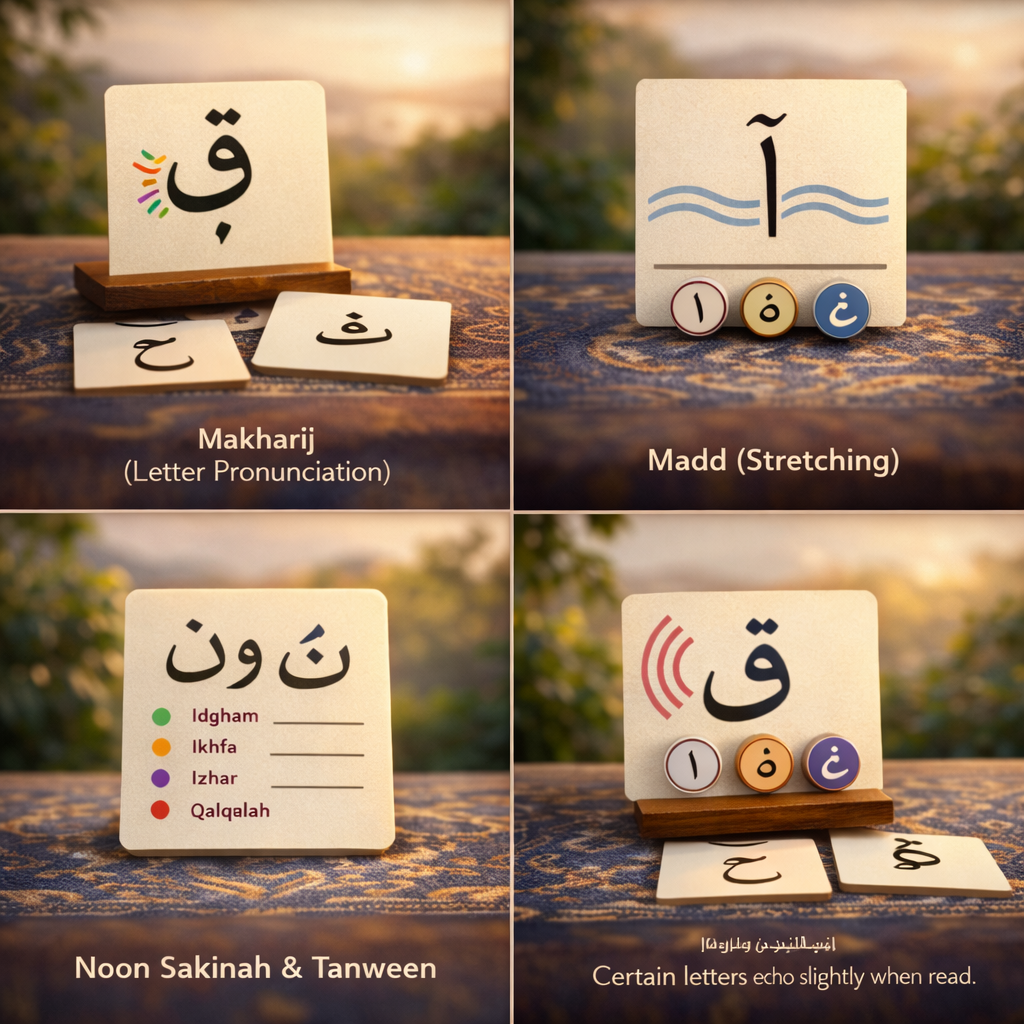
Makharij (Letter Pronunciation)
Each Arabic letter has a specific place of sound.
Madd (Stretching)
Some letters need to be stretched for a few counts.
Noon Sakinah & Tanween
These follow rules like:
- Idgham
- Ikhfa
- Izhar
Qalqalah
Certain letters echo slightly when read.
Take it step by step. Don’t rush.
Can Beginners Learn Tajweed Easily?
Yes. But you need patience.
Start with:
- Noorani Qaida
- Basic rules
- Daily practice
Even 15–20 minutes a day helps.
And it’s better to learn with a teacher.
Tajweed for Non-Arab Muslims
Most Muslims in the UK and USA are non-Arab.
So mistakes are normal.
But that doesn’t mean we ignore Tajweed.
In fact, it becomes more important.
Because:
- Arabic is not our first language
- We need guidance to pronounce correctly
And with online learning, it’s easier now.
How to Improve Your Tajweed
Keep it simple. Follow this:
- Read daily
- Listen to good reciters
- Practice slowly
- Take feedback from a teacher
And don’t rush.
Progress takes time.
A Hadith About Quran Recitation
The Prophet ﷺ said:
“The one who recites the Quran beautifully will be with the noble angels.”
(Sahih Bukhari & Muslim)
And the one who struggles still gets reward.
So don’t feel discouraged.
Final Thoughts
Tajweed is not just for experts.
It is for every Muslim who reads the Quran.
You don’t need to be perfect. But you should try.
Start small. Stay consistent.
And improve step by step.
Because the Quran deserves to be read the right way.
FAQs
Is Tajweed compulsory?
Basic Tajweed is necessary to avoid major mistakes in recitation.
How long does it take to learn Tajweed?
It depends on your practice. Basics can be learned in a few weeks.
Can I learn Tajweed at home?
Yes. With online classes and practice, it is possible.
Do kids need Tajweed?
Yes. It’s best to teach them early so they build correct habits.
Learn Tajweed Today