
A Complete Guide Based on Quran and Sunnah
Published by Kalamullah Online
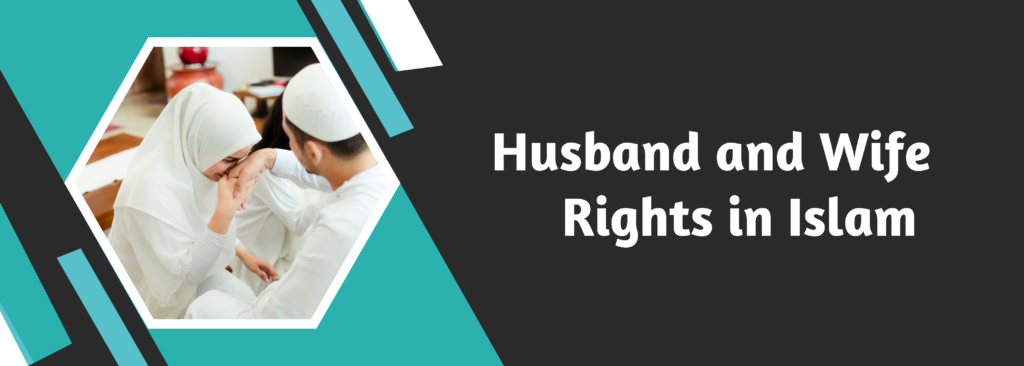
Introduction: More Than a Legal Bond
Marriage in Islam is not just a contract, it is a sacred covenant described in the Quran as a mithaqan ghaleeza (a solemn, firm covenant). Every Muslim couple enters this relationship with the hope of building a home filled with peace, love, and mercy. Yet misunderstandings about husband and wife rights in Islam continue to strain marriages, not because Islam is unclear, but because many people have never taken the time to understand what it actually teaches.
Think about the couple who married with the best intentions but slowly drifted apart not due to lack of love, but because neither knew what they were truly entitled to, or what they owed each other. This is more common than we realize. Islam addressed this 1,400 years ago with a framework so balanced, so human, and so practical that it remains relevant today.
This guide walks through the rights of wife in Islam and the rights of husband in Islam drawn directly from the Quran and authentic Hadith so that every Muslim couple can build their marriage on solid, informed ground.
Rights of the Wife in Islam
The wife’s rights in Islam are not secondary or conditional they are obligations upon the husband, clearly established in divine text. Understanding these rights is not about demanding; it is about knowing the standard Islam has set for how a woman must be treated.
1. The Right to Mahr (Dowry)
One of the most fundamental wife rights in Islam is the mahr a mandatory gift from the husband to the wife at the time of marriage. This is her personal property; no one, not even her parents, has any claim over it.
“And give the women their mahr as a free gift. But if they, of their own good pleasure, remit any part of it to you, then you may enjoy it with pleasure and good cheer.” (Quran 4:4)
The mahr is a powerful symbol of respect and commitment. It tells the wife, from day one, that she enters this marriage with dignity and security.
2. Financial Security and Maintenance (Nafaqah)
The husband is fully responsible for providing food, clothing, housing, and all basic necessities for his wife regardless of whether she works or has her own wealth. This is known as nafaqah, and it is a legal right, not a favor.
“Let the man of means spend according to his means; and the man whose resources are restricted, let him spend according to what Allah has given him.” (Quran 65:7)
The Prophet Muhammad (PBUH) reinforced this clearly: “It is enough sin for a man to neglect those who are under his care.” (Hadith Abu Dawud). If a man fails to provide for his wife, he is committing a sin, not just a social failing.
3. Kindness, Respect, and Emotional Safety
Physical rights of wife in Islam are well-known, but emotional rights are equally protected. The Quran commands husbands to live with their wives “in kindness and equity” (4:19). Islam forbids emotional abuse, verbal cruelty, and neglect just as firmly as physical harm.
“The best of you are those who are best to their wives.” (Prophet Muhammad ﷺ Tirmidhi)
The Prophet himself was a model of this. He helped with household chores, expressed affection openly, and never considered showing tenderness to his wives as a weakness. His marriage was a living example of what Islam demands from husbands.
4. The Right to Education and Self-Development
A wife has the right to seek Islamic knowledge, grow as an individual, and maintain her identity. The rights of wife in Islam in Quran and Hadith do not confine a woman to silence or ignorance. She has the right to speak, to ask, and to be heard.
Rights of the Husband in Islam
Just as the wife has clear rights, the rights of husband in Islam are also established in the Quran and Sunnah. Understanding husband rights on wife in Islam does not mean control it means responsibility, leadership, and the trust placed in him to care for the household with fairness.
1. Respect and Obedience in Reasonable Matters
Husband rights in Islam include the right to be respected as the head of the household. The Quran describes the husband’s role as that of a qawwam a caretaker and protector:
“Men are the caretakers of women, as men have been provisioned by Allah over women and tasked with supporting them financially.” (Quran 4:34)
However, husband right on wife in Islam is not absolute authority. Scholars are unanimous: obedience to a husband is only obligatory in matters that do not involve sin. No wife is required to obey a command that goes against Allah’s command. The Prophet (PBUH) said: “There is no obedience to creation in disobedience to the Creator.” (Ahmad)
2. The Right to a Managed and Peaceful Home
Husband rights over wife in Islam include the expectation that she maintains the family home with care and honesty. This does not mean she is a servant it means she is the trusted guardian of what they have built together. The Prophet (PBUH) said that the wife is a “shepherdess in her husband’s house and is responsible for her flock.” (Bukhari)
3. Faithfulness and Loyalty
Rights of husband and wife in Islam both include fidelity. Just as the husband must be faithful, the wife must protect her husband’s honor, his trust, and their private life. This mutual obligation is what keeps the sanctity of Islamic marriage intact.
4. Support and Cooperation
Husbands’ rights in Islam in Urdu-speaking communities are often misrepresented as purely authoritative. In reality, the Prophet (PBUH) described the relationship between spouses as one of mutual support. He said: “Take good care of women, for they are created from a rib…” (Bukhari), meaning they must be handled with wisdom and gentleness, not force.
Duties of Husband and Wife Towards Each Other
Understanding rights is only half the picture. Islam equally emphasizes duties what each spouse owes the other, not just what they can claim.
For the husband:
- Provide financially without being stingy or neglectful
- Treat his wife with dignity and never demean or humiliate her
- Be emotionally present and express love openly
- Fulfill her physical rights with care and sensitivity
- Never prevent her from maintaining family ties
For the wife:
- Respect her husband’s leadership role in the household
- Guard their home, trust, and privacy
- Support him emotionally and be a source of calm, not conflict
- Raise children with Islamic values
- Seek permission before leaving the home for non-essential reasons, unless this is agreed upon
These duties are not burdens they are the building blocks of a healthy Islamic marriage. Platforms like Kalamullah Online offer structured Quran and Islamic studies courses that help couples understand these responsibilities from authentic Islamic sources, which is deeply valuable for building knowledge from the ground up.
The Role of Love, Mercy, and Mutual Respect
Perhaps the most beautiful verse about marriage in the Quran is this:
“And of His signs is that He created for you from yourselves mates that you may find tranquility in them; and He placed between you affection and mercy.” (Quran 30:21)
Islam does not reduce marriage to roles and rules. The foundation is mawaddah (affection) and rahmah (mercy). When both spouses lead with these two qualities, especially in disagreements, they are following the Sunnah of emotional intelligence long before modern psychology coined the term.
The right of husband and wife in Islam is ultimately a right to be loved properly not just tolerated. Every couple deserves a marriage where they feel seen, valued, and at peace.
Clarification on Multiple Wives in Islam
This is one of the most misunderstood aspects of Islamic marriage. Multiple wives in Islam, known as polygyny, is permitted under very specific conditions, not encouraged as a general practice.
“…then marry those that please you of other women, two or three or four. But if you fear that you will not be just, then marry only one.” (Quran 4:3)
The key word is “just.” The Quran itself warns that complete equality between multiple wives is almost impossible (4:129), making the permission a carefully guarded allowance rather than a recommendation. The Prophet (PBUH) said: “Whoever has two wives and leans toward one of them will come on the Day of Resurrection with one of his sides drooping.” (Abu Dawud)
Islam did not invent polygyny it regulated and restricted a practice that already existed and sometimes left women abandoned. The spirit of the ruling is protective of women, not dismissive of them.
Common Misconceptions About Husband and Wife Rights in Islam
Misconception 1: Islam gives the husband total authority over his wife
This is perhaps the most common distortion. Husband rights on wife in Islam in Urdu-speaking and South Asian Muslim communities are sometimes presented as near-absolute. In truth, the Prophet (PBUH) said: “The most complete of the believers in faith are those with the best character, and the best of you are those who are best to their women.” (Tirmidhi). Authority in Islam comes with accountability to Allah it is not a license to control or oppress.
Misconception 2: The wife has no say in major decisions
Islamic history shows the opposite. Sayyidah Khadijah (RA) was a successful businesswoman. Sayyidah Aisha (RA) was one of the greatest scholars of Islam. The Prophet (PBUH) consulted his wives and took their advice seriously. A wife in Islam is a partner, not a subordinate who is to be seen and not heard.
Misconception 3: Physical rights of wife can be ignored
The physical rights of wife in Islam are explicitly recognized in Islamic jurisprudence. The wife has the right to physical intimacy and emotional connection. Scholars have stated that a husband who neglects this right for extended periods without valid reason is failing in his Islamic duty.
Misconception 4: Hadees about wife rights are restrictive
The hadees about wife rights the Hadith on wife’s rights are largely protective and empowering. The Farewell Sermon of the Prophet (PBUH) devoted an entire section to women’s rights, urging men to “fear Allah regarding women” and to treat them well. Hadith about wife rights consistently emphasize kindness, fairness, and care not control.
Practical Tips for a Healthy Islamic Marriage
- Make dua together couples who pray together build a bond that goes beyond the physical world
- Revisit your Islamic marriage responsibilities periodically read about wife huqooq in Islam and husband ke huqooq in Islam together as a couple
- Learn from authentic sources whether through books, qualified scholars, or platforms like Kalamullah Online that offer Islamic education rooted in proper methodology
- Never weaponize rights knowing your rights is not a tool for conflict; it is a guide for fairness
- Handle disputes privately and with patience the Prophet (PBUH) never publicly humiliated his family
- Express gratitude the Prophet (PBUH) said that those who do not thank people do not truly thank Allah
- Seek counseling from a knowledgeable and trustworthy Islamic scholar or counselor when problems arise, before they become irreparable
Conclusion: A Marriage Built on Divine Wisdom
The rights of husband and wife in Islam are not a power struggle they are a divine arrangement designed to bring out the best in both spouses. When a husband fulfills his wife’s rights with sincerity, and when a wife fulfills her husband’s rights with love and dignity, what emerges is a home that reflects Allah’s mercy on earth.
Whether you are newly married, preparing for marriage, or seeking to strengthen an existing relationship, returning to these Islamic foundations is always the right place to start. The rights of wife in Quran and the duties outlined in the Sunnah are not outdated they are timeless wisdom for timeless human needs.
Take time to study these teachings deeply. Share them with your spouse. Discuss them openly. And remember every effort you make to build a better Islamic marriage is an act of worship.
“And your Lord has decreed that you not worship except Him, and to parents, good treatment. Whether one or both of them reach old age while with you… And lower to them the wing of humility out of mercy…” (Quran 17:23-24)
May Allah bless every Muslim home with love, mercy, understanding, and the knowledge to fulfill one another’s rights with grace. Ameen.