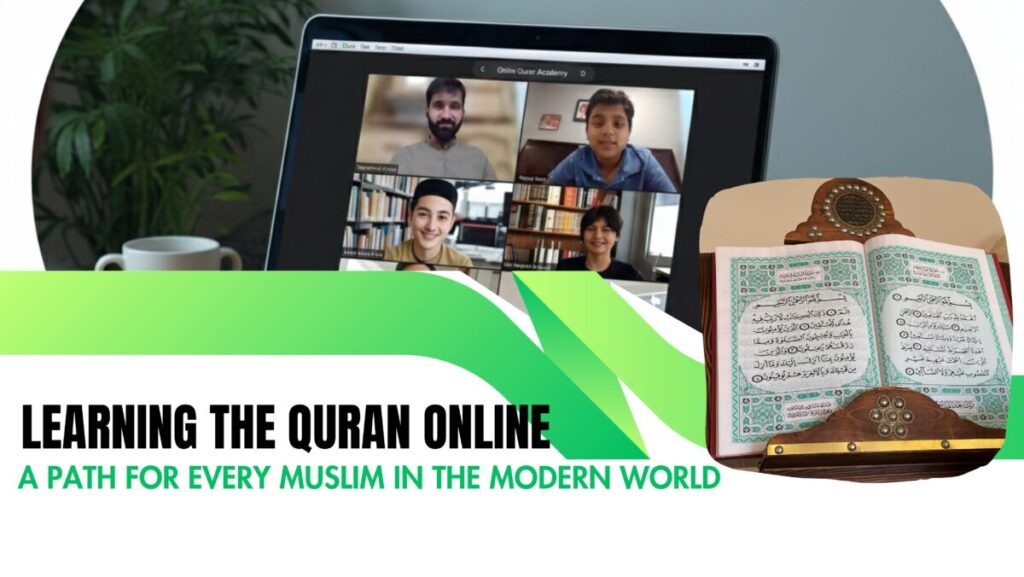
Every parent who holds their faith close wants the same thing for their child a genuine connection to the Quran. Not just recitation from memory, but a real understanding that grows with them. The challenge today isn’t finding the will; it’s finding the right path. With traditional mosque schedules, distance, and busy family routines, many parents are turning to online Quran classes for kids and for good reason.
This guide is written for parents who want honest, practical answers. Whether you’re just starting out or looking to switch to a better learning environment, here’s everything you need to know.
Why Online Quran Classes Are Important for Kids
A generation ago, learning the Quran meant sitting at the feet of a local scholar, often in a mosque or a neighbour’s home. That model still works beautifully where it’s available. But for millions of Muslim families living in Western countries, remote areas, or places with limited Islamic infrastructure, access to qualified Quran teachers is simply not easy.
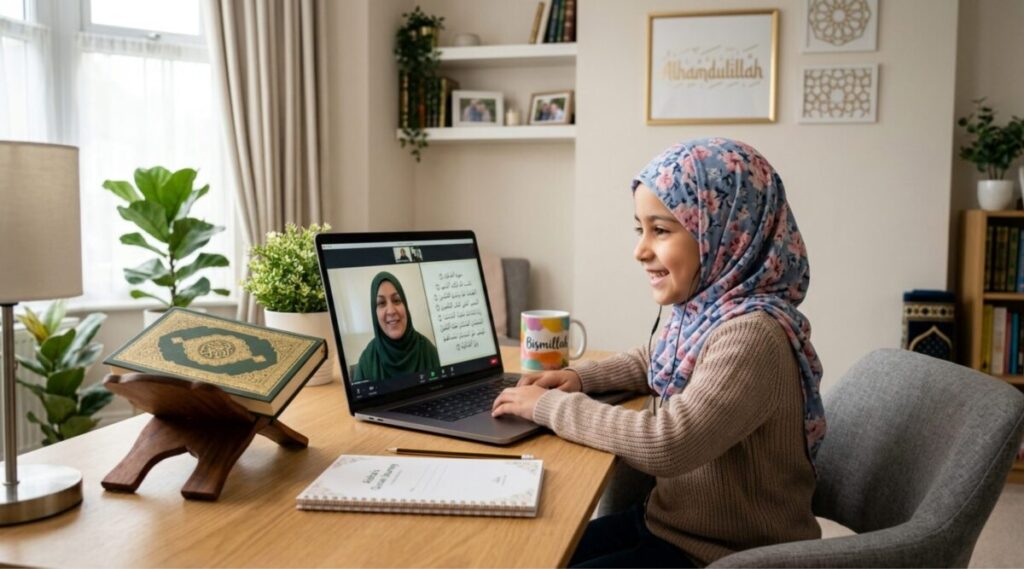
Online Quran classes solve that problem directly. They connect your child with trained, certified teachers regardless of where you live. And beyond geography, they offer something traditional setups often can’t: flexibility, consistency, and a learning environment tailored to the child’s pace.
For kids especially, consistency matters more than intensity. Showing up three or four times a week for focused, one-on-one online lessons builds habits that last far longer than a rushed summer intensive.
Benefits of Online Quran Learning
Parents who make the switch to online Quran learning often wish they’d done it sooner. Here’s why:
- Qualified teachers, no matter where you are. Your child can learn from native Arabic speakers and certified scholars from Egypt, Pakistan, or Malaysia all from your living room.
- One-on-one attention. Unlike group classes at a mosque where a teacher manages fifteen children, online lessons are typically private. Your child gets correction in real time without embarrassment.
- Flexible scheduling. Morning before school, evenings after homework, or weekends you choose what works.
- Progress tracking. Reputable online Quran academies provide regular reports so parents know exactly where their child stands.
- Safe learning environment. Your child learns at home, eliminating travel time and safety concerns.
- Comfort builds confidence. Many shy children open up more when they’re in their own space. That ease translates directly into better learning outcomes.
What Parents Should Look For in an Online Quran Academy
Not all platforms offering quran online courses are the same. Here’s how to separate quality from noise:
Teacher Qualifications
Look for academies where teachers hold an Ijazah a formal chain of transmission that certifies them to teach the Quran. This matters. It means your child isn’t learning from someone who simply memorised on their own.
Teaching Methodology
A good academy doesn’t just push kids through Surah after Surah. They teach pronunciation, meaning, and application. Ask whether the curriculum includes Tajweed rules from the beginning or treats them as an afterthought.
Trial Classes
Any reputable platform will offer a free trial. Use it. Sit with your child during the first session. Observe how the teacher interacts, corrects, and encourages.
Student-to-Teacher Ratio
For children, private or near-private instruction is significantly more effective than group settings online. Confirm this before enrolling.
Parent Communication
A good Quran academy keeps parents in the loop with progress reports, attendance tracking, and easy access to teachers for feedback.
Reviews and Reputation
Look for real parent testimonials, not just website copy. Check independent reviews and ask in community groups.
Types of Quran Courses for Kids
When you start exploring quran study online, you’ll notice that most academies offer several types of courses. Understanding the difference helps you choose what’s right for your child’s age and level.
Noorani Qaida / Basic Arabic Reading This is the starting point for complete beginners. Before a child can read the Quran, they need to understand the Arabic alphabet, vowel marks, and letter joining rules. Most children between the ages of 4 and 7 begin here.
Quran Recitation (Nazira) Once a child can read basic Arabic, they move into reading the Quran fluently. This stage focuses on fluency and accuracy.
Tajweed Classes Online Tajweed is the science of correct Quran pronunciation. Rules govern everything from the length of a vowel to the nasalisation of certain letters. Many children who’ve been reciting for years are surprised to discover how much they were missing. Tajweed classes online introduce these rules in a structured, age-appropriate way.
Hifz Quran (Memorisation) For children who aim to memorise the Quran, Hifz programmes are the right path. More on this below.
Quran Translation and Tafsir Older children benefit from understanding what they’re reading. Translation courses introduce basic Quranic Arabic and the meanings behind the verses.
How Kids Can Learn Quran with Tajweed Online
Learning Quran with Tajweed online is more accessible than most parents expect. The key is starting with the basics and not rushing.
Most online tajweed courses for children begin with the Makharij the points of articulation, which simply means learning exactly where in the mouth or throat each letter is produced. From there, rules are introduced gradually: rules of Noon Saakinah, Meem Saakinah, Madd (elongation), and so on.
What makes online tajweed courses effective for kids is visual and audio repetition. A skilled teacher will model the correct pronunciation, ask the child to repeat, and gently correct in the moment. Unlike reading from a book, the live feedback loop makes learning Tajweed intuitive rather than mechanical.
A practical tip: record your child’s sessions occasionally (with the teacher’s permission). Listening back together helps reinforce correct sounds and lets you celebrate real progress.
Hifz Quran for Children: A Beginner Guide
Helping your child memorise the Quran is one of the greatest gifts a parent can give. But Hifz is a long journey typically three to six years for a full-time student and it requires the right expectations from the start.
What age should a child begin Hifz? Most scholars recommend starting between 6 and 10, when memory is sharp and habits are still forming. That said, children as young as 5 can begin memorising shorter Surahs informally before joining a structured programme.
What does a Hifz programme look like online? A typical online Hifz schedule involves daily sessions, usually 30 to 60 minutes, where the child learns new verses (Sabaq), reviews recent lessons (Sabqi), and revises older memorised portions (Manzil). The three-part structure is essential without consistent revision, memorisation fades.
What parents need to know Hifz requires family commitment, not just a child’s. You’ll need to help your child revise between sessions. Even 10 to 15 minutes of daily revision at home makes an enormous difference. Treat it like homework consistent, expected, and valued.
Some families enrol their children with platforms like Kalamullah Online, which structures Hifz programmes with dedicated teachers who follow each child’s individual progress. That kind of continuity the same teacher, consistent feedback, long-term relationship is especially valuable in Hifz, where the teacher needs to know exactly what a child has memorised and what needs reinforcement.
Tips for Parents to Support Their Child’s Learning
The teacher handles instruction. Your role as a parent is to build the environment where learning can stick.
- Create a dedicated learning space. Even a small, quiet corner signals to a child that this time is serious and sacred.
- Be present during early sessions. Especially for younger children, knowing you’re nearby reduces anxiety.
- Celebrate milestones. Finishing a Juz, mastering a Tajweed rule, completing Noorani Qaida all of it deserves recognition.
- Don’t compare your child to others. Every child learns at their own pace. Comparison breeds resentment toward the very thing you want them to love.
- Connect the Quran to daily life. Play recitations in the home. Read a Surah together before bed. When the Quran is part of everyday life, the child sees it as living, not just as lessons.
- Communicate with the teacher. If your child is struggling, say so. If their interest is dropping, raise it early. The best outcomes come from teacher-parent collaboration.
Common Mistakes to Avoid
Even well-meaning parents make these missteps:
Prioritising speed over quality. Rushing through Surahs without proper Tajweed creates habits that are very hard to unlearn later. Slow and correct is always better than fast and wrong.
Inconsistent scheduling. Sporadic lessons don’t build momentum. Commit to a regular weekly schedule and protect it.
Ignoring a child’s emotional state. If your child is tired, anxious, or resistant, pushing harder rarely works. Ask questions. Sometimes a simple schedule adjustment or a different teacher makes all the difference.
Choosing platforms based on price alone. Free quran online classes exist and some are genuinely good for basics. But for structured, long-term learning, especially Tajweed and Hifz, investing in a qualified, accountable teacher pays off in ways that cut-price options rarely do.
Skipping the foundation. Parents sometimes want to jump straight into Quran recitation without ensuring the child has solid Arabic reading skills. The Qaida stage exists for a reason don’t rush past it.
Why Consider Kalamullah Online
Among the growing number of platforms offering quran online courses, Kalamullah Online stands out for its structured approach and commitment to teacher quality. It offers courses across the full learning journey from beginner Arabic reading to advanced Tajweed and Hifz with teachers who are certified and experienced in working with children specifically.
What parents particularly appreciate is the personalised attention. Lessons are scheduled around your family’s routine, and the academy maintains open communication with parents throughout. For families living outside Muslim-majority countries who struggle to find consistent, qualified local instruction, a platform like Kalamullah Online offers a reliable, long-term solution.
It’s not about choosing the trendiest platform. It’s about finding teachers who genuinely care about your child’s relationship with the Quran and who bring the knowledge and patience to nurture it.
Conclusion
The Quran is not just a text to be memorised and recited. For our children, it can be a companion, a source of comfort, and an identity rooted in something lasting. The effort you put into finding the right online Quran classes for your child today is an investment that will compound across their entire life.
Take your time. Use the trial sessions. Ask questions. Watch how your child responds to a teacher before committing. And once you find the right fit, stay consistent. The results won’t always come quickly, but they will come.
Your child’s journey with the Quran begins with a single lesson and the right environment makes all the difference.