
Eid-ul-Fitr marks the end of Ramadan. Muslims gather for prayer, gratitude, and unity. Eid prayer stands as one of the main acts of worship on this day. The prayer reflects obedience to Allah and gratitude for guidance during Ramadan.
The Quran highlights gratitude after fasting.
“Complete the prescribed period and glorify Allah for guiding you so you give thanks.”
Quran 2:185
Muslims across the world attend Eid prayer in large gatherings. Mosques, open grounds, and community spaces host these congregations. The prayer builds unity, discipline, and remembrance of Allah.
This guide explains the correct method of performing Eid-ul-Fitr Prayer using authentic Islamic sources.
Importance of Eid-ul-Fitr Prayer
Eid prayer holds strong importance in Islamic practice. It marks the completion of Ramadan worship. Muslims express gratitude and renew commitment to faith.
Authentic narrations describe how the Prophet Muhammad, peace be upon him, encouraged Muslims to attend the Eid gathering. Men, women, and children attended the prayer.
Narration recorded in Sahih al-Bukhari reports attendance of the Muslim community on Eid day.
The gathering strengthens brotherhood and community connection.
Key purposes of Eid prayer include.
• Express gratitude to Allah
• Strengthen unity among Muslims
• Celebrate completion of Ramadan
• Encourage charity and compassion
The prayer reflects both worship and community spirit.
Preparation Before Eid-ul-Fitr Prayer
Islam encourages preparation before attending Eid prayer. These steps follow the Sunnah of the Prophet Muhammad, peace be upon him.

Perform Ghusl
Take a full ritual bath before leaving home. Cleanliness forms part of Islamic worship. Muslims present themselves in a respectful state for the Eid gathering.
Wear Clean Clothes
Wear neat and clean clothing. Eid represents a day of joy and gratitude. Good appearance reflects respect for the occasion.
Eat Before Leaving
Eating before Eid prayer forms a Sunnah practice.
A narration from Sahih al-Bukhari reports the Prophet eating dates before leaving for Eid prayer.
Eating before the prayer distinguishes Eid-ul-Fitr from Eid-ul-Adha.
Give Zakat-ul-Fitr
Zakat-ul-Fitr stands as an obligation before Eid prayer. This charity supports people in need and purifies fasting.
Key goals of Zakat-ul-Fitr include.
• Support poor families
• Purify fasting from mistakes
• Allow everyone to join Eid celebration
Payment occurs before the Eid prayer begins.
Time of Eid-ul-Fitr Prayer
Eid prayer takes place after sunrise. The sun rises above the horizon, then the prayer begins. The time lasts until shortly before Dhuhr prayer.
Many communities perform the prayer early in the morning. Early prayer allows time for family gatherings and community visits.
Mosques and open grounds host the congregational prayer.
Step-by-Step Method of Performing Eid-ul-Fitr Prayer
Eid prayer includes two units of prayer known as rakats. Additional Takbeer occurs within the prayer.
Follow these steps carefully.
Step 1. Make Intention
Make intention in the heart before the prayer begins. The intention focuses the act of worship for Allah.
No spoken words required for intention. The heart holds the purpose of worship.
Step 2. Begin the Prayer
The Imam begins the prayer with Takbeer.
Raise hands and say Allahu Akbar. The congregation follows the Imam.
This action marks the start of the prayer.
Step 3. Additional Takbeer in First Rakat
After the opening Takbeer, the Imam performs additional Takbeer. The congregation follows each Takbeer.
Different Islamic schools report different counts. Many communities perform three additional Takbeer.
After the Takbeer.
• Recite Surah Al-Fatiha
• Recite another portion of the Quran
The Imam then moves to Ruku.
Ruku means bowing before Allah.
The prayer continues with Sujood which means prostration.
Step 4. Second Rakat
The Imam stands for the second unit of prayer.
The following actions occur.
• Recitation of Surah Al-Fatiha
• Recitation of another Quran passage
After recitation, additional Takbeer occur again before Ruku.
The Imam then performs Ruku and Sujood as part of the normal prayer structure.
Step 5. Complete the Prayer
After finishing the second rakat.
The Imam sits for Tashahhud.
The prayer ends with Salam to the right and left.
The congregation follows the Imam throughout the prayer.
Eid Khutbah After Prayer
After completion of Eid prayer, the Imam delivers a sermon known as Khutbah.
This sermon occurs after the prayer. Friday prayer follows a different structure where the sermon occurs before the prayer.
The Eid sermon provides guidance and reminders.
Topics often include.
• Gratitude to Allah
• Maintaining good deeds after Ramadan
• Community unity
• Charity and compassion
Listening to the sermon forms a recommended practice.
Sunnah Practices on Eid Day
Islam encourages several Sunnah practices during Eid celebrations. These actions follow the traditions of the Prophet Muhammad, peace be upon him.
Reciting the Takbeer
Muslims recite Takbeer while travelling to the prayer location.
The Takbeer words include.
Allahu Akbar Allahu Akbar
La ilaha illa Allah
Allahu Akbar Allahu Akbar
Wa lillahil hamd
This remembrance glorifies Allah and celebrates guidance.
Using Different Routes
Authentic narrations report the Prophet returning from Eid prayer using a different route than the one used for arrival.
This action allowed wider interaction with the community.
Greeting Other Muslims
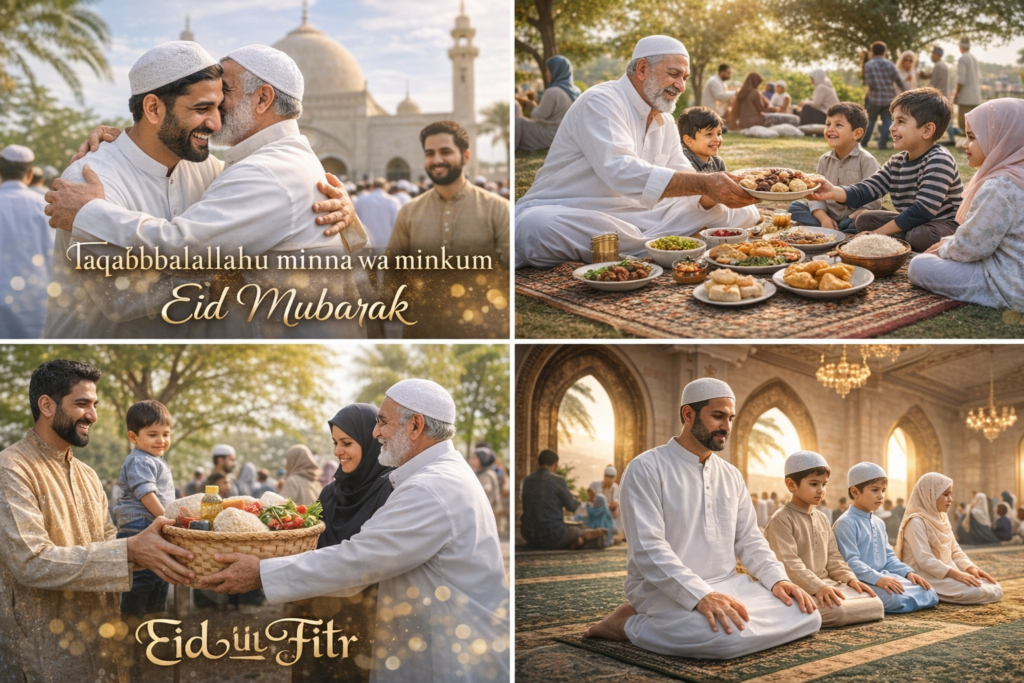
Muslims greet one another after the prayer.
Common greetings include.
Eid Mubarak
Taqabbalallahu minna wa minkum
This greeting means.
Allah accept good deeds from us and from you.
These greetings strengthen brotherhood and goodwill.
Charity and Community on Eid
Eid-ul-Fitr emphasizes compassion and generosity. Charity remains an essential part of the celebration.
Families share food with neighbors and relatives. Community members support those facing hardship.
Acts encouraged on Eid include.
• Visiting relatives
• Helping families in need
• Sharing meals with neighbors
• Strengthening family ties
These actions reflect Islamic values of unity and compassion.
Spiritual Meaning of Eid-ul-Fitr
Eid-ul-Fitr marks a milestone after Ramadan. Muslims completed a month of fasting, prayer, patience, and discipline.
The day reminds believers to continue acts of worship throughout the year.
Ramadan trained the heart and character. Eid celebrates gratitude for guidance.
The prayer, charity, and community gatherings reflect obedience to Allah and commitment to faith.
Muslims celebrate Eid through worship, kindness, and unity.
Conclusion
Eid-ul-Fitr prayer holds deep spiritual meaning in Islam. The prayer marks the completion of Ramadan and expresses gratitude to Allah.
Preparation includes cleanliness, charity, and Sunnah practices. The prayer includes two rakats with additional Takbeer and a sermon after completion.
Muslims gather in unity for worship and celebration. The day strengthens faith, community bonds, and compassion for others.
Following the guidance from the Quran and authentic Hadith helps Muslims perform Eid-ul-Fitr prayer with proper understanding and devotion.
Eid Mubarak.
