
Introduction
After a month of fasting, reflection, and spiritual growth during Ramadan, Muslims around the world celebrate Eid-ul-Fitr, one of the most joyful days in Islam. However, Eid-ul-Fitr is not just about celebration, new clothes, or delicious food. According to the Quran and Sunnah, it is a day of gratitude, worship, and community.
The Quran emphasizes that Ramadan is a time for strengthening faith, developing self-discipline, and drawing closer to Allah. Eid-ul-Fitr marks the successful completion of this sacred journey.
In this guide, we will explore what the Quran teaches about Eid-ul-Fitr, its spiritual meaning, and the practices Muslims should follow according to authentic Islamic teachings.
The Connection Between Ramadan and Eid-ul-Fitr
To understand Eid-ul-Fitr, we must first understand its connection with Ramadan. The Quran clearly explains the purpose of fasting in Ramadan.
Allah says in the Quran:
“O you who believe! Fasting is prescribed for you as it was prescribed for those before you, that you may become righteous.”
(Quran 2:183)
This verse highlights that fasting is meant to develop taqwa (God-consciousness). By abstaining from food, drink, and sinful behavior, Muslims strengthen their spiritual connection with Allah.
Eid-ul-Fitr is therefore a celebration of spiritual success. It represents the completion of a month dedicated to prayer, patience, charity, and self-discipline.
Another verse also connects Ramadan with gratitude:
“He wants you to complete the prescribed period and to glorify Allah for guiding you, so that you may be grateful.”
(Quran 2:185)
This verse shows that gratitude is one of the core messages of Eid-ul-Fitr.
The Spiritual Meaning of Eid-ul-Fitr in the Quran
The Quran does not mention Eid-ul-Fitr directly by name, but it clearly outlines the principles behind it: gratitude, charity, unity, and remembrance of Allah.
1. Gratitude to Allah
One of the most important lessons of Eid-ul-Fitr is gratitude. Muslims thank Allah for giving them the strength to complete the fasts of Ramadan.
Gratitude in Islam goes beyond words. It includes:
- Remembering Allah
- Performing prayer
- Helping others
- Sharing blessings with the community
When Muslims gather for the Eid prayer, they begin the day with the remembrance of Allah, showing that the celebration is rooted in faith.
2. Charity and Caring for Others
Islam strongly emphasizes helping the poor and ensuring that everyone can enjoy the day of Eid-ul-Fitr.
Before the Eid prayer, Muslims are required to give Zakat-ul-Fitr, a form of charity that supports the needy.
The Prophet ﷺ said:
“The Messenger of Allah made Zakat-ul-Fitr obligatory as a purification for the fasting person from idle talk and mistakes, and as food for the poor.”
(Sunan Abu Dawood 1609)
This teaching highlights the social purpose of Eid-ul-Fitr: ensuring that no one is left behind in the celebration.
Sunnah Practices of Eid-ul-Fitr
The Sunnah of Prophet Muhammad ﷺ provides clear guidance on how Muslims should observe Eid-ul-Fitr.
Following these Sunnah practices helps Muslims celebrate the day in a meaningful and spiritually rewarding way.
1. Performing the Eid Prayer
One of the most important acts of worship on Eid-ul-Fitr is the special congregational prayer.
The Prophet ﷺ encouraged Muslims to attend the Eid prayer, including men, women, and children.
This gathering strengthens unity within the Muslim community and reminds believers of the blessings of Ramadan.
2. Reciting the Takbeer
Before the Eid prayer, Muslims recite the Takbeer to glorify Allah:
“Allahu Akbar, Allahu Akbar, La ilaha illa Allah, Allahu Akbar, Allahu Akbar, wa lillahil hamd.”
This act reflects the Quranic instruction to glorify Allah for guiding believers through Ramadan.
3. Giving Zakat-ul-Fitr
As mentioned earlier, Zakat-ul-Fitr is an essential part of Eid-ul-Fitr.
It must be given before the Eid prayer so that those in need can also participate in the celebration.
This practice highlights the Islamic values of compassion, generosity, and social responsibility.
4. Celebrating Within Islamic Limits
Islam encourages happiness and celebration on Eid-ul-Fitr, but it also reminds Muslims to maintain modesty and gratitude.
The Prophet ﷺ said:
“Every nation has its festival, and this is our festival.”
(Sahih Bukhari)
This Hadith confirms that Eid-ul-Fitr is a legitimate and joyful celebration for Muslims, but it should always remain within the boundaries of Islamic teachings.
How Muslims Around the World Celebrate Eid-ul-Fitr
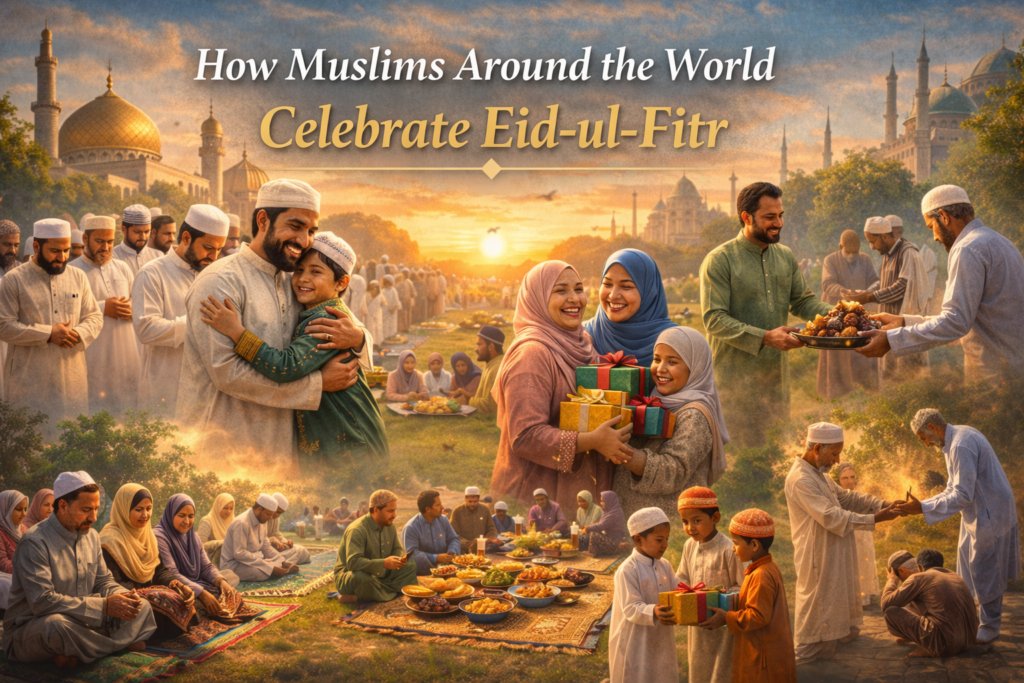
One of the beautiful aspects of Eid ul-Fitr is its global unity. Muslims from different cultures celebrate the day in various ways while following the same religious principles.
Common traditions include:
- Attending the Eid prayer at mosques or open grounds
- Visiting family and friends
- Sharing meals together
- Giving gifts to children
- Helping the poor and needy
Despite cultural differences, the central message of Eid-ul-Fitr remains the same: faith, gratitude, and unity.
Lessons Muslims Should Remember After Eid-ul-Fitr
While Eid-ul-Fitr marks the end of Ramadan, it should not mark the end of spiritual growth.
The lessons learned during Ramadan should continue throughout the year.
Some important lessons include:
Consistency in Worship
Muslims should continue regular prayers, Quran recitation, and remembrance of Allah even after Ramadan ends.
Maintaining Good Character
Ramadan teaches patience, kindness, and self-control. These qualities should remain part of everyday life.
Continuing Charity
Helping others should not stop after Eid-ul-Fitr. Islam encourages ongoing charity and generosity.
The True Spirit of Eid-ul-Fitr
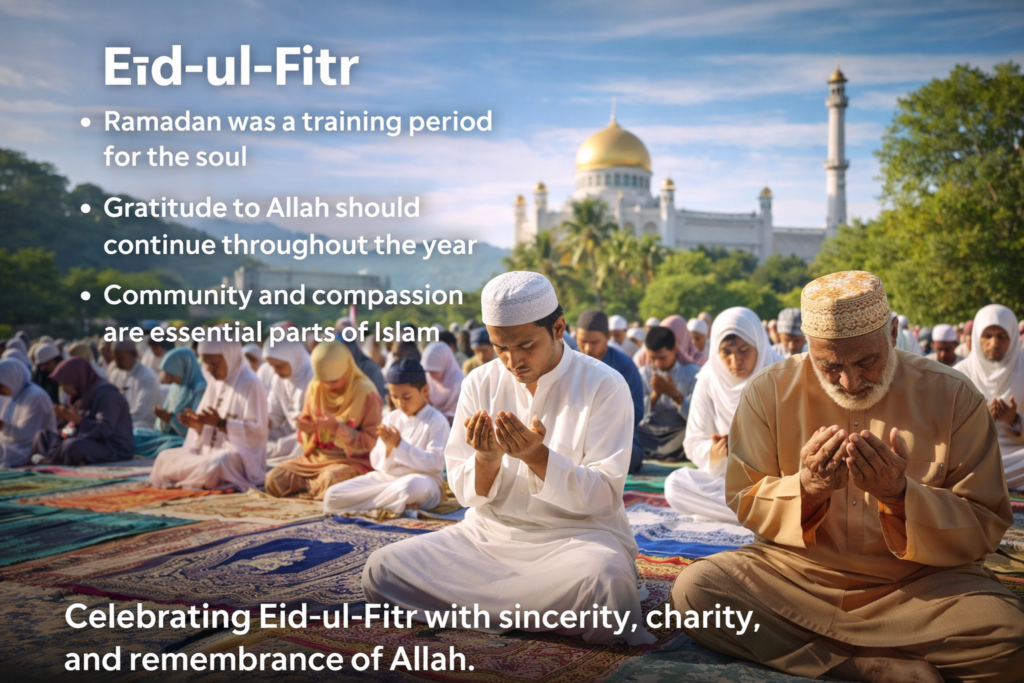
The true spirit of Eid-ul-Fitr is not defined by material celebrations but by spiritual success.
It is a reminder that:
- Ramadan was a training period for the soul
- Gratitude to Allah should continue throughout the year
- Community and compassion are essential parts of Islam
When Muslims celebrate Eid-ul-Fitr with sincerity, charity, and remembrance of Allah, they truly honor the teachings of the Quran and Sunnah.
Conclusion
Eid-ul-Fitr is much more than a festival. According to the Quran and authentic Hadith, it is a day of gratitude, unity, charity, and spiritual reflection.
By following the teachings of Islam, Muslims can ensure that their Eid-ul-Fitr celebration remains meaningful and rewarding.
As believers around the world gather to celebrate this blessed day, they are reminded of the beautiful message of Islam: faith, compassion, and gratitude to Allah.
May Allah accept our fasts, prayers, and good deeds during Ramadan and allow us to celebrate Eid-ul-Fitr with sincerity and joy.
